20 Good Ways For Deciding On The Sceye Platform20 Good Ways For Deciding On The Sceye Platform
HAPS Vs Satellites: Which One Wins In Stratospheric Coverage?
1. The Question Itself Reveals A Change in the Way We View the concept of coverage
For the greater part of the last few decades, debate of reaching remote or disadvantaged regions by air has been made into a debate about the best option between ground infrastructure and satellites. The advent of high-altitude platform stations has opened up an alternative that doesn't have the same logical place in either this is what is interesting about the debate. HAPS don't want to substitute satellites throughout the board. They're competing in specific instances where the physics behind operating at 20 kilometres instead of 35,000 or 500 kilometers yields significantly better results. Knowing where the advantage is true and where it's not can be a whole process.
2. Latency is Where HAPS Win In a Straight Line
Signal travel time is determined by distance. This is one of the reasons why stratospheric satellites have an unambiguous structural advantage over any orbital system. A geostationary satellite is located approximately 35,786 kilometres above the equator. This results in continuous latency of approximately 600 milliseconds. This can be utilized for voice calls, but with a significant delays, but difficult for real-time applications. Low Earth orbit satellites have dramatically improved this, operating at 550 to 1,200 kilometres, with latency ranging from the 20-40 millisecond range. A HAPS vehicle travelling at 20 kilometres produces latency figures equivalent as terrestrial ones. For applications in which responsiveness is a factor — industrial control systems emergency communications, financial transactions direct-to-cell connectivity that difference is not merely marginal.
3. Satellites win on global coverage and That's All That Matters
The stratospheric platform that is currently being developed can be used to cover the entire world. One HAPS vehicle has a regional footprint, which is big in terrestrial terms, but finite. In order to achieve global coverage, one would need a system of platforms that are distributed across the globe, with each with its own operating system the energy system, its own power source, and station keeping. Satellite constellations, specifically large LEO networks, can cover the planet with overlapping covering in ways which stratospheric structures simply cannot duplicate with current vehicle counts. Applications that require truly universal reach for maritime tracking, global messaging, and polar coverage — satellites remain the only viable option at the scale.
4. Persistence and Resolution Favour of HAPS on Earth Observation
When the purpose is to monitor an area in constant motion -recording methane emissions from an industrial corridor, monitoring the progress of a wildfire unfold in real time or tracking oil pollution growing from an off-shore incident The continuous close-proximity of a stratospheric platform results in data quality that satellites struggle to beat. A satellite in low Earth orbit travels over any particular point on the surface for minutes at a time which is followed by revisit intervals by hours or days, depending on the size of the constellation. A HAPS vehicle holding position above the same region for weeks can provide continuous observation by utilizing sensor proximity for much higher resolution spatial. for stratospheric purposes in earth observation the persistence of this method is typically superior to global reach.
5. Payload Flexibility is a HAPS Advantage Satellites aren't readily match
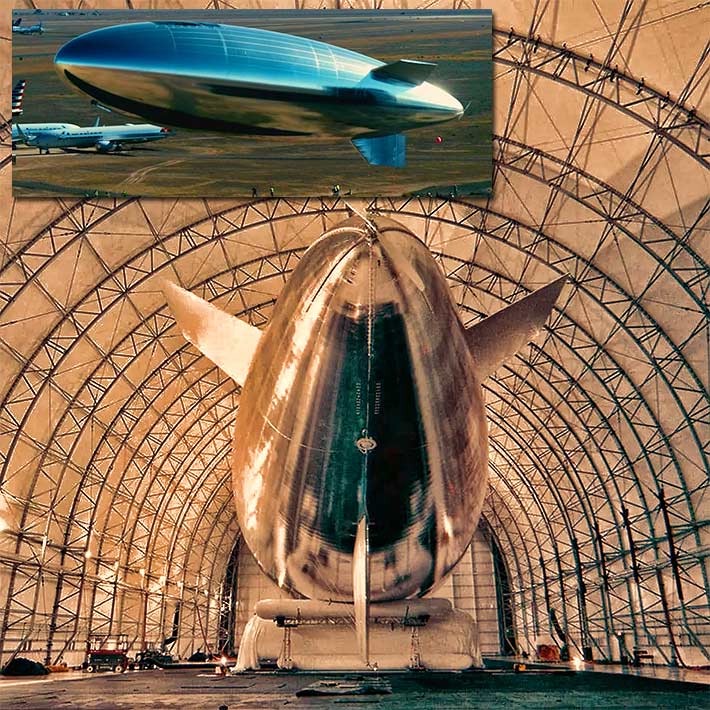
When a satellite is launched, the payload of the satellite is fixed. Upgrades to sensors, switching communication hardware or adding new instruments requires the launch of an entirely new spacecraft. A stratospheric platform returns to the ground after each mission, which means its payload can be modified, reconfigured or completely changed as requirements for missions change or better technology becomes available. Sceye's airship's design specifically accommodates the capacity of a payload that is meaningful, allowing various combinations of telecommunications equipment, greenhouse gas sensors and disaster detection systems in the same platform — a capability that requires multiple satellites to replicate each with their own launched cost as well as orbital slots.
6. The Cost Structure Is Fundamentally Different
Launching a satellite will involve rocket costs, ground segment development, insurance and acceptance of the fact that hardware failures in orbit are a permanent write-off. Stratospheric platforms function much like aircrafts, and can be recovered, examined or repaired before being repositioned. However, this doesn't guarantee that they're cheaper than satellites in a per-coverage-area basis, but it can alter the risk profile as well as the upgrade economics considerably. For those trying new services to enter new markets, the capability to access and alter the platform, rather taking orbital devices as sunk-cost represents a meaningful operational advantage for the HAPS sector, especially in its early commercial phases the HAPS market is traversing.
7. HAPS can be used as 5G Backhaul In Place of Satellites Where Satellites Do Not Effectively
The telecommunications infrastructure that is enabled by the high-altitude platform station that operates as a HIBS which is essentially like a cell tower located in the sky that is designed to integrate with existing standard mobile networks in ways satellite connectivity typically didn't. Beamforming from a stratospheric telecom antenna is a way to dynamically allocate signals across a larger coverage area as well as 5G backhaul connectivity to earth infrastructure as well as direct to device connections simultaneously. Satellites are increasingly able within this realm, but the fact that they operate closer to ground gives stratospheric technology an advantage in signal the strength of their signal, reuse of frequency, and compatibility with spectrum allocations made for terrestrial networks.
8. Operational and weather risk differ A lot between the Two
Satellites, once they have been placed in stable orbits, generally are indifferent to terrestrial weather. The HAPS vehicle operating in the stratosphere face an even more complicated operating environment with stratospheric wind patterns such as temperature gradients, the engineering challenge of managing at night while still maintaining the station. Diurnal cycles, also known as the regularity of solar energy availability and nighttime power draw, is a design constraint each solar-powered HAPS is required to address. The advancements in lithium-sulfur battery energy capacity and solar cell efficiency are closing the gap, but it's an operational issue that satellite operators do not encounter in the same way.
9. It's a fact that They perform different tasks.
Distinguishing satellites from HAPS as a contest that will decide who wins is a misreading of how technology for non-terrestrial networks is likely to evolve. A more accurate picture is a more complex structure that includes satellites with global coverage and applications where coverage universality trumps everything else, while stratospheric platforms serve regional persistence purposes -connectivity for geographically difficult environments, continuous monitoring of environmental conditions as well as disaster response. the expansion of 5G into areas in which terrestrial rollout is not economically feasible. The location of Sceye's platform reflects precisely this premise: a platform designed to do things in a specific region, that can last for a longer period, and includes the use of a sensor and communications system that satellites aren't able replicate at the same altitude or the distance.
10. The Competition will eventually sharpen Both Technologies
There's a valid argument that the rise of reliable HAPS programmes has helped accelerate technology in satellites, and reverse. LEO constellation operators have increased coverage and latency in ways that have raised the bar HAPS must clear to compete. HAPS developers have demonstrated constant regional monitoring capabilities that are prompting satellite operators to examine how to improve the resolution of sensors and revisit frequencies. A Sceye and SoftBank collaboration to target Japan's entire HAPS network, as well as pre-commercial services expected for 2026 is among the most clear indications that the stratospheric platforms have shifted from a potential competitor into an active participant in shaping how the non-terrestrial connectivity and observation market develops. Both of these technologies are better for the pressure. See the most popular marawid for more info including sceye haps project, telecom antena, stratospheric internet rollout begins offering coverage to remote regions, sceye careers, sceye disaster detection, what are high-altitude platform stations haps definition, 5G backhaul solutions, sceye haps status 2025, Cell tower in the sky, what is haps and more.
Mikkel Vestergaard's Vision Behind Sceye's Aerospace Mission
1. The Founding Vision is an underrated factor in Aerospace Company Outcomes
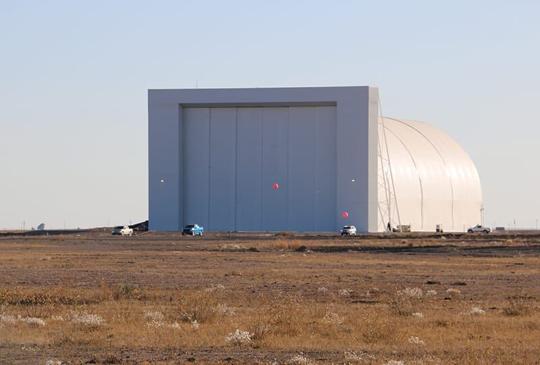
The aerospace industry is one of two major categories of business. The first one is based on technologies looking for potential applications — a capability in engineering to find a market. The other starts with a need that is significant and works backwards towards the technology for addressing it. This may sound like a logical distinction until you study what each kind of business actually does along with the kind of partnerships it makes and how it compromises when resources are strained. Sceye belongs to the second category, and understanding the significance of orientation is vital to understand why the company chose the specific engineering choices it has -it's lighter than air design and multi-mission payloads that emphasize endurance, and an initial facility in New Mexico rather than the coastal aerospace clusters that attract the most venture-backed aerospace companies.
2. The Problem Vestergaard Then Identified As Was More Than Connectivity
The majority of HAPS companies have their core storyline in telecommunications. an insufficient connectivity, untapped billions, and the economics of reaching distant populations with no the infrastructure of a terrestrial network. These are all real and significant issues, but they're commercial problems with commercial solutions. Mikkel Vestergaard's starting point was different. His experience with applying advanced technology to environmental and humanitarian problems created a fundamental orientation at Sceye that regards connectivity as one of the outputs of stratospheric infrastructure and not its sole purpose. Monitoring of greenhouse gas emissions for disaster detection, ground observation and monitoring of oil pollution and natural resource management were part of Sceye's mission from the beginning — not additions later on to make a telecoms service appear more socially conscious.
3. The Multi-Mission System is the Direct Manifestation of That Vision
If you can see that the initial question was about how the stratospheric networks could address major monitor and connectivity problems at the same time the multi-payload platform is no longer a smart commercial strategy and becomes like the correct answer to the question. Platforms that carry communications hardware, methane monitoring sensors as well as wildfire detection technology isn't attempting become everything to all — it's expressing the idea that issues that require solving from the stratosphere are interconnected and a vehicle that is capable of tackling a range of them at once is more in line with the objective than one made to work with a single revenue stream.
4. New Mexico Was a Deliberate choice, not an accidental One
The location of Sceye's headquarters situated in New Mexico reflects practical engineering needs such as airspace access or atmospheric testing conditions high altitude capabilities, but it also reflects something about the business's identity. The established aerospace hubs and clusters within California and Texas have attracted companies whose principal customers are investors, defence contractors, and the media ecosystem that covers the area. New Mexico offers something different in terms of the physical conditions needed to do the actual work of designing and testing stratospheric lighter-than air systems without the performance pressure of being within the reach of those that fund and write about aerospace. As one of the aerospace companies in New Mexico, Sceye has built a development programme oriented around engineering validation rather than public narrative, a choice that indicates a founder more concerned with how the platform works instead of whether it has amazing announcement cycles.
5. A design focus on endurance Inspires a Long-Term Mission
Short-endurance HAPS platforms are fascinating demonstrations. Long-endurance stations are infrastructure. The focus on Sceye ability to endure — creating vehicles that could hold stations for months or even weeks, rather than days — illustrates a founder's knowledge that the issues worth addressing from the stratosphere don't resolve themselves between flight campaigns. Monitoring of greenhouse gases that runs for about a week after which it goes out of service, creating a record of limited scientific or regulatory use. Emergency detection that requires an infrastructure that can be moved and relaunched at the end of each deployment isn't a permanent early warning system that emergency managers need. The endurance specification is an outline of what needs of the mission are instead of a metric for performance which is used solely for its own benefit.
6. Humanitarian Lens Shapes Partnerships Humanitarian Lens Shapes Which Partnerships Preferentially Feature
It is not every partnership worth exploring an opportunity, and the criteria which utilized by companies when evaluating potential partners tells us something fundamental about its business goals. Sceye's collaboration with SoftBank for Japan's nationwide HAPS network aimed at pre-commercial services in 2026 -that is notable not only due to its commercial scope, but for its alignment with the country that is in need of the services that stratospheric infrastructure offers. Japan's seismicity, complex geography, and national pledge to environmental protection make it a suitable deployment scenario where the platform's multimission capabilities satisfy specific needs, rather than providing revenue in a sector that already has sufficient alternatives. The alignment between commercial partnership and mission purpose is not in any way accidental.
7. The investment in Future Technologies Requires Conviction About the Problem
Sceye operates in a learning environment where the technologies it depends on lithium-sulfur batteries that have 425 Wh/kg power density, high-efficiency solar cells designed for stratospheric airplanes, advanced beamforming for telecom antennas in stratospheric space — are all far beyond what's feasible today. Making a business plan based on technologies that are improving but not yet mature requires a founder with the necessary understanding on the significance of the issue in order to justify the risk of a timeline. Vestergaard's belief, that stratospheric connectivity is going to become a permanent layer of global connectivity and monitoring is what sustains investment into the next generation of technologies, which won't get to their fullest operational capacity until the platform they support is flying commercially.
8. Its Environmental Monitoring Mission Has Become More urgent since its creation.
One of the advantages of establishing a business around the real issue instead of an emerging trend in technology is that the issue grows more rather important rather than becoming less. When Sceye was founded, the argument for ongoing surveillance of the stratospheric greenhouse gas in wildfire detection and environmental disaster monitoring was compelling in principle. In the time since the founding, the increasing frequency of wildfires, increased scrutiny of methane emissions in international climate frameworks and an insufficient monitoring infrastructures have all bolstered that case considerably. The initial vision doesn't have change to remain relevant — the world is moving towards it.
9. Sceye's Careers Sceye Show how the Breadth of the Mission
The spectrum of disciplines required to develop and manage stratospheric platforms for multi-mission purposes is greater than what most aerospace-related programmes. Sceye careers encompass the fields of atmospheric science, materials engineering, communication, power systems Remote sensing and software creation as well as regulatory matters — a cross-disciplinary profile that reflects all the capabilities of Sceye is designed to accomplish. Businesses based around a single-use technology tend to only hire within the field of technology. Companies founded around a problem which requires multiple converging technologies in order to find a solution that crosses the boundaries of these disciplines. The type of candidate Sceye has developed and attracts is itself a reflection of the founding vision's scope.
10. The Vision Work Because It's Specific about the issue And Not the Solution
The most lasting visions for founding in tech companies are clear about the problem they're tackling and flexible about the methods used. The vision of Vestergaard — persistent stratospheric networks for monitoring, connectivity, and environmental observations is a precise enough concept to provide clear engineering requirements and clear partnerships criteria, and yet is flexible enough so that it can adapt to the changing requirements of the enabling technologies. As battery chemistry improves, increasing the efficiency of solar cells and HIBS standards improve, and as the regulatory environment for stratospheric operations develops, Sceye's goal remains the same as its means of executing it can take advantage of the most current technology at each stage. This structure — fixed on the problem and reliant to the solution is the reason why the aerospace mission has coherence across a development timeline that is measured in years, not the cycle of product development. Check out the top Wildfire detection technology for blog examples including sceye haps softbank partnership details, marawid, marawid, whats the haps, what does haps, sceye haps softbank japan 2026, sceye connectivity solutions, Station keeping, Mikkel Vestergaard, whats the haps and more.